Septic Tank Pumping & Septic System FAQs
This FAQ page answers common questions about septic tank pumping, septic warning signs, drain fields, maintenance, costs, and when to call a septic professional.
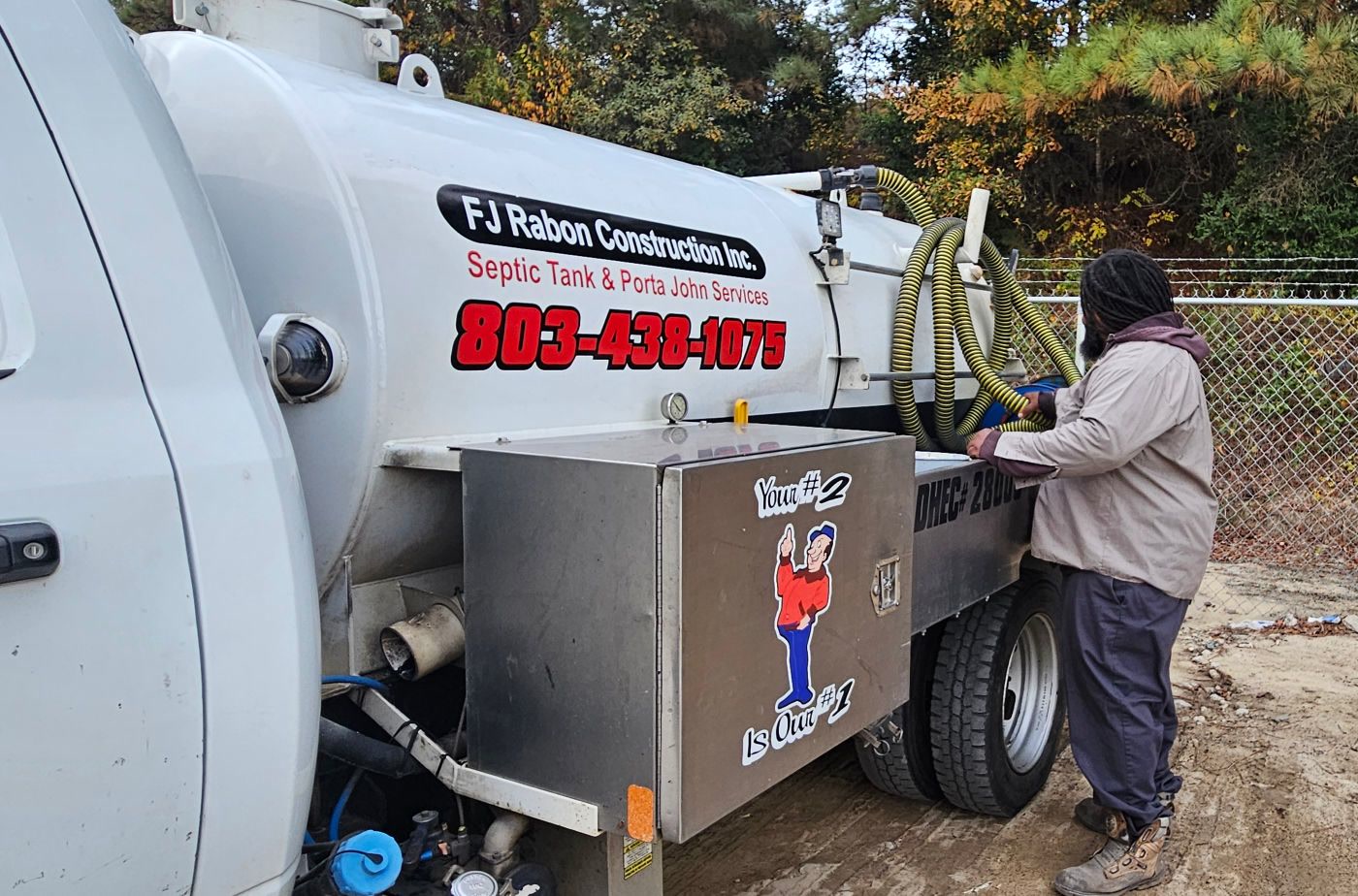
If your home or business uses a septic system, regular maintenance is one of the best ways to avoid messy backups, sewage odors, slow drains, and expensive repairs. At FJ Rabon, we help local property owners keep their septic systems working properly with septic tank pumping, cleaning, inspections, and maintenance services.
If you need septic service now, contact FJ Rabon for reliable local septic help.
Septic Tank Pumping FAQs
How do I know when my septic tank needs to be pumped?
Common signs your septic tank may need to be pumped include slow drains, gurgling pipes, sewage odors, standing water near the drain field, toilets that flush slowly, or wastewater backing up into sinks, tubs, showers, or toilets.
However, you should not wait until there is a problem to schedule septic pumping. A septic tank can become too full before obvious symptoms appear. Regular pumping removes built-up solids before they can clog the system or damage the drain field.
How often should a septic tank be pumped?
Most septic tanks should be pumped every three to five years, but the right schedule depends on several factors, including:
- Septic tank size
- Number of people in the household
- Amount of water used
- Use of a garbage disposal
- Age and condition of the system
- Laundry, bathing, and dishwashing habits
- Whether the property is residential, commercial, or rental
South Carolina’s Department of Environmental Services recommends septic systems be inspected every one to two years and pumped as needed, often every three to five years.
Can a septic tank get full before three years?
Yes. A septic tank can fill faster than expected if the home has a large family, heavy water use, frequent guests, a garbage disposal, or people flushing items that should not go into a septic system.
Rental properties, short-term rentals, restaurants, churches, offices, and commercial properties may need septic pumping more frequently than a typical single-family home.
What happens if I do not pump my septic tank?
If a septic tank is not pumped regularly, solids can build up and eventually move into the drain field. This can cause serious septic problems, including:
- Sewage backups inside the home
- Slow or clogged drains
- Bad odors indoors or outdoors
- Standing wastewater in the yard
- Drain field failure
- Expensive repairs or replacement
Routine septic pumping is much less expensive than repairing or replacing a failed drain field.
Will septic pumping fix all septic problems?
Not always. Septic pumping removes sludge and solids from the tank, but some septic problems may require additional service. If the problem is caused by a clogged line, damaged baffle, broken pipe, pump failure, or failing drain field, pumping alone may not solve it.
That said, pumping is often the first step in diagnosing and correcting septic system problems.
Can I pump my own septic tank?
No. Septic tank pumping should be handled by trained professionals with proper vacuum trucks, equipment, safety procedures, and approved disposal methods.
Opening or attempting to pump a septic tank yourself can be dangerous because of toxic gases, bacteria, confined-space hazards, and the risk of tank collapse.
How long does septic tank pumping take?
Most residential septic pumping appointments take about 30 minutes to a few hours, depending on the tank size, how easy it is to access, how full it is, and whether additional inspection or cleaning is needed.
If the septic tank lids are buried or difficult to reach, the appointment may take longer.
Do I need to be home for septic tank pumping?
In many cases, you may not need to be home if the septic tank location is known and accessible. However, it is helpful for the property owner to be available to point out the tank location, explain any recent septic problems, and answer questions.
When scheduling service with FJ Rabon, ask whether someone needs to be present for your appointment.
What should I do before my septic pumping appointment?
Before your septic service appointment, you can help by:
- Locating the septic tank if you know where it is
- Clearing vehicles, debris, or landscaping from the access area
- Securing pets
- Letting the technician know about slow drains, odors, or backups
- Avoiding excessive water use if the system is already having problems
If you do not know where your septic tank is located, FJ Rabon can help.
Septic Warning Signs and Emergency FAQs
What are the early warning signs of septic problems?
Early signs of septic system trouble may include:
- Slow-draining sinks, tubs, showers, or toilets
- Gurgling sounds in toilets or drains
- Sewage odors inside or outside
- Wet or soggy areas near the septic tank or drain field
- Grass that is unusually green or lush over the drain field
- Water backing up when using the washing machine
- Multiple drains slowing down at the same time
If you notice these signs, call FJ Rabon before the problem gets worse.
What is considered a septic emergency?
A septic emergency includes any situation where wastewater is backing up, sewage is visible, or the septic system is no longer safely handling household wastewater.
Examples include:
- Sewage backing up into toilets, tubs, showers, or sinks
- Strong sewage odors inside the home
- Standing wastewater in the yard
- Toilets that will not flush properly
- Multiple drains backing up at the same time
- A septic alarm going off
- Wastewater surfacing near the drain field
If you have a septic emergency, stop using water and call a septic professional.
What should I do if sewage backs up into my house?
If sewage backs up into your home:
- Stop using water immediately.
- Do not flush toilets, run sinks, shower, or do laundry.
- Keep children and pets away from contaminated areas.
- Avoid direct contact with sewage.
- Call FJ Rabon for septic service.
Sewage backups can create health risks and should be handled quickly.
Is sewage backing up into my house a sign my septic tank needs pumping?
Yes, it can be. Sewage backing up into your home is one of the most serious signs of a septic system problem. It may mean the tank is full, a line is clogged, or the drain field is not accepting wastewater properly.
If sewage is backing up into toilets, tubs, showers, or floor drains, stop using water and call a septic professional immediately.
Why does my toilet gurgle when I run water?
A gurgling toilet may be caused by a clogged drain line, a full septic tank, venting problems, or a septic system that is struggling to drain properly.
If the toilet gurgles when you run the shower, sink, dishwasher, or washing machine, the issue may involve the main line or septic system.
Why do multiple drains back up at the same time?
When several drains back up at once, the issue is often in the main drain line or septic system rather than a single fixture. This may be caused by a blockage, full septic tank, or drain field problem.
A septic professional can determine whether pumping, cleaning, or repair is needed.
Why does my house smell like sewer gas?
A sewer smell inside the home may come from dry drain traps, plumbing vent issues, or septic system problems. If the smell is strongest near drains or appears with slow drainage, your septic system may need attention.
Persistent sewer odors should be inspected by a professional.
Why does my yard smell like sewage?
A sewage smell in the yard may be caused by an overfull septic tank, clogged line, damaged pipe, or failing drain field. Septic odors should not be ignored because they may indicate wastewater is not staying contained within the system.
FJ Rabon can inspect the system and help identify the cause.
Why is there standing water near my septic tank?
Standing water near the septic tank may mean the tank is full, a line is clogged, the tank is leaking, or wastewater is not moving properly into the drain field.
Avoid contact with standing water near septic components because it may contain untreated wastewater.
Should I keep using water if I think my septic system is failing?
No. If you suspect septic failure, reduce or stop water use until the system is inspected. Continued water use can make backups, odors, and yard flooding worse.
Avoid laundry, dishwashing, long showers, and unnecessary flushing until help arrives.
Septic System Maintenance FAQs
What is the best way to maintain a septic system?
The best way to maintain a septic system is to pump the tank regularly, schedule routine inspections, use water efficiently, and avoid flushing or draining items that can clog or damage the system.
Good septic maintenance includes:
- Septic inspection every one to two years
- Septic pumping every three to five years, or as needed
- Avoiding grease, wipes, and harsh chemicals
- Protecting the drain field from vehicles and heavy equipment
- Repairing leaks quickly
- Watching for slow drains, odors, or wet spots in the yard
How often should my septic system be inspected?
Septic systems should generally be inspected every one to two years. Regular inspections can catch small issues before they become expensive repairs.
A septic inspection may include checking sludge and scum levels, looking for leaks, evaluating the tank condition, checking baffles, and looking for signs of drain field problems.
What should never go into a septic system?
You should avoid putting the following items into a septic system:
- Baby wipes or “flushable” wipes
- Feminine hygiene products
- Paper towels
- Grease, fats, and oils
- Cat litter
- Dental floss
- Cigarette butts
- Cotton swabs
- Diapers
- Paint, solvents, or pesticides
- Harsh chemicals
- Medications
Only human waste and septic-safe toilet paper should be flushed.
Are flushable wipes safe for septic tanks?
No. Flushable wipes are not recommended for septic systems. Even if they go down the toilet, they do not break down like toilet paper and can clog pipes, collect in the tank, and contribute to backups.
Is toilet paper safe for septic systems?
Yes, most standard toilet paper is safe for septic systems when used reasonably. Septic-safe toilet paper breaks down more easily and may be better for older or sensitive systems.
Avoid very thick, ultra-plush toilet paper if your septic system has a history of clogs or slow drainage.
Can I use a garbage disposal with a septic system?
Yes, but use it carefully. A garbage disposal sends food particles and extra solids into the septic tank, which can increase sludge buildup and require more frequent pumping.
If you use a garbage disposal often, ask FJ Rabon whether your septic tank should be pumped more frequently.
Is grease bad for septic systems?
Yes. Grease, fats, and oils can harden in pipes, clog drains, and cause problems inside the septic tank. Grease can also interfere with the natural separation of solids and liquids.
Instead of pouring grease down the drain, let it cool and dispose of it in the trash.
Can too much laundry hurt my septic system?
Yes. Doing many loads of laundry back-to-back can overload a septic system with too much water at once. Excess water can push solids through the tank before they settle and can stress the drain field.
It is better to spread laundry loads throughout the week.
Can long showers affect my septic system?
Yes. Long showers can send a large amount of water into the septic system. Septic systems need time to separate solids and move liquid wastewater into the drain field.
Water-efficient fixtures and leak repairs can help reduce stress on the system.
Why is water conservation important for septic systems?
Water conservation helps your septic system work properly. Too much water entering the tank too quickly can prevent solids from settling and can overwhelm the drain field.
Using water efficiently can help extend the life of your septic system.
Septic Drain Field FAQs
What is a septic drain field?
A septic drain field, also called a leach field, is the area where liquid wastewater from the septic tank is distributed into the soil for treatment and absorption.
The drain field usually contains underground pipes or chambers that spread wastewater evenly through the soil.
How does a septic drain field work?
After solids settle in the septic tank, liquid wastewater flows out to the drain field. The wastewater is distributed through underground lines and slowly filters through the soil.
The soil helps remove harmful bacteria, viruses, and nutrients before the water returns to the environment.
What are signs of a failing drain field?
Signs of a failing drain field include:
- Wet or soggy areas in the yard
- Sewage odors outside
- Bright green or overly lush grass
- Slow drains throughout the home
- Toilets backing up
- Standing water over the drain field
- Septic alarm problems
- Wastewater surfacing above ground
If you notice these symptoms, contact FJ Rabon for service.
What causes drain field failure?
Drain field failure can be caused by:
- Lack of septic pumping
- Solids leaving the tank and clogging the field
- Excessive water use
- Heavy rain or poor drainage
- Soil compaction from vehicles or equipment
- Tree root intrusion
- System age
- Improper installation
- Grease or non-biodegradable materials entering the system
Routine septic pumping is one of the best ways to protect your drain field.
Can a full septic tank damage the drain field?
Yes. When a septic tank is not pumped regularly, solids can build up and flow into the drain field. Once solids clog the drain field, wastewater cannot absorb into the soil properly.
Drain field repairs can be expensive, which is why routine septic pumping is so important.
Why is the grass over my drain field bright green?
Grass over a drain field may look unusually green or lush when wastewater is surfacing or the drain field is overloaded. While green grass may seem harmless, it can be a warning sign of septic trouble.
If the area is wet, soggy, or smells bad, call for septic service.
Can heavy rain cause septic problems?
Yes. Heavy rain can saturate the soil around the drain field and make it harder for wastewater to absorb properly. This can lead to slow drains, backups, or standing water.
During and after heavy rain, reduce water use if your septic system shows signs of stress.
Can I build over a septic drain field?
No. You should not build patios, driveways, sheds, pools, decks, or other structures over a septic drain field. Building over the field can compact soil, reduce oxygen flow, and prevent wastewater from absorbing properly.
Keep the drain field open and covered with grass.
Can I drive or park over my septic tank or drain field?
No. Vehicles, trailers, and heavy equipment should not be driven or parked over septic tanks or drain fields. Excess weight can damage pipes, compact soil, and reduce the drain field’s ability to absorb wastewater.
Can I landscape over a drain field?
Yes, but only with shallow-rooted grass or plants. Avoid trees, shrubs, and deep-rooted plants because roots can damage septic lines.
Do not add heavy landscaping, raised beds, or irrigation over the drain field without professional guidance.
What should I do if my drain field is wet?
If your drain field is wet, soggy, or has standing water, reduce water use immediately and call a septic professional. Keep children and pets away from the area.
Wet drain fields may contain untreated wastewater and can indicate septic failure.
Septic Pumping Cost and Scheduling FAQs
How much does septic tank pumping cost?
The cost of septic tank pumping depends on several factors, including tank size, location, accessibility, amount of waste, and whether additional service is needed.
For the most accurate price, contact FJ Rabon with details about your property and septic system.
What affects the cost of septic pumping?
Septic pumping pricing may be affected by:
- Septic tank size
- How easy the tank is to access
- Whether the lids are exposed or buried
- Distance from the service provider
- Amount of sludge and solids in the tank
- Whether the system needs cleaning or inspection
- Emergency or after-hours service needs
Regular maintenance can help avoid more expensive emergency calls.
Is septic pumping cheaper than septic repair?
Yes. Routine septic pumping is usually much less expensive than repairing a failed system, replacing a drain field, or cleaning up a sewage backup.
Preventive maintenance helps protect your septic system and your property.
How do I schedule septic pumping?
To schedule septic pumping, contact FJ Rabon and provide:
- Your name and address
- Type of property
- Whether you know the tank location
- Approximate tank size, if known
- Last time the tank was pumped
- Any current problems such as odors, backups, or slow drains
FJ Rabon can help determine the right service for your situation.
What if I do not know where my septic tank is?
If you do not know where your septic tank is located, FJ Rabon can help locate it. Septic tanks are often found between the house and the drain field, but the exact location varies by property.
Once the tank is located, it is smart to keep a record of its location for future service.
Do septic tank lids need to be uncovered before service?
If your septic tank lids are buried, they may need to be uncovered before pumping. Some customers choose to expose the lids before the appointment, while others may need help accessing the tank.
Ask FJ Rabon about access requirements when scheduling service.
Can septic pumping be done in the rain?
Septic pumping may be possible in light rain, but severe weather, flooding, or unsafe property conditions can affect service. Heavy rain may also make it harder to evaluate the drain field.
If weather is a concern, FJ Rabon can advise you on scheduling.
Should I pump my septic tank before selling my house?
In many cases, yes. Pumping and inspecting the septic tank before selling a home can help identify issues early and provide documentation to buyers.
Some real estate transactions may require septic inspection or pumping depending on local rules, lender requirements, or buyer requests.
Should I inspect the septic system before buying a house?
Yes. If you are buying a home with a septic system, it is smart to have the system inspected before closing. A septic inspection can help you understand the condition of the tank, drain field, and related components.
This can help prevent unexpected repair costs after you purchase the property.
How can I remember when to pump my septic tank?
Keep a septic maintenance record that includes:
- Date of each pumping
- Company that performed the service
- Tank size
- Tank location
- Inspection notes
- Any repairs completed
- Recommended next service date
FJ Rabon can help you set up a regular septic maintenance schedule.
Residential, Commercial, and Local Septic Service FAQs
What septic services does FJ Rabon provide?
FJ Rabon provides septic services that may include septic tank pumping, septic cleaning, septic inspections, troubleshooting, maintenance, and related septic support.
Contact FJ Rabon directly to confirm availability for your property and service area.
Does FJ Rabon service residential septic systems?
Yes. FJ Rabon works with homeowners who need septic tank pumping, septic inspections, maintenance, and help with septic problems such as odors, slow drains, backups, or wet drain fields.
Does FJ Rabon service commercial septic systems?
FJ Rabon can assist commercial properties with septic service needs. Commercial septic systems may require more frequent maintenance depending on water use, property type, and system size.
Restaurants, offices, churches, shops, and other businesses should keep a regular septic maintenance schedule.
Do rental properties need more frequent septic pumping?
Often, yes. Rental properties may need more frequent septic pumping because water use and flushing habits can vary from tenant to tenant.
Short-term rentals and vacation homes can also place heavy seasonal demand on septic systems. Routine pumping helps protect the property and reduce emergency calls.
Should restaurants with septic systems pump more often?
Yes. Restaurants and food-service businesses may need more frequent septic maintenance because of high water use and the risk of grease entering the system.
Grease management is especially important for commercial septic systems.
Can septic problems affect my business?
Yes. Septic problems can disrupt business operations, create odors, cause restroom closures, and lead to unsanitary conditions.
For businesses, preventive septic maintenance is important for customer comfort, employee safety, and avoiding downtime.
Do I need septic service if my system seems fine?
Yes. A septic system can appear to work normally even when sludge is building up inside the tank. Waiting until there is a backup or odor can lead to costly damage.
Regular pumping and inspection help prevent hidden problems.
How do I choose a septic service company?
When choosing a septic service company, look for:
- Local experience
- Proper equipment
- Knowledge of septic systems
- Clear scheduling and communication
- Good customer service
- Ability to inspect and troubleshoot issues
- Safe waste handling practices
FJ Rabon provides local septic service with a focus on reliable maintenance and customer support.
Why should I hire a local septic company?
A local septic company understands area soil conditions, weather patterns, common septic problems, and local service needs. Local providers can often respond more quickly and make practical recommendations based on experience in the region.
When should I call FJ Rabon?
You should call FJ Rabon if:
- Your septic tank has not been pumped in several years
- You notice slow drains or gurgling toilets
- You smell sewage indoors or outdoors
- Wastewater is backing up into the home
- Your yard is wet near the septic system
- Your septic alarm is going off
- You are buying or selling a home with a septic system
- You want to set up a preventive maintenance schedule
Need Septic Tank Service?
If your septic tank is due for pumping or you are noticing slow drains, odors, backups, gurgling toilets, or wet spots in your yard, contact FJ Rabon today.
Our team provides reliable local septic service to help keep your septic system working properly and prevent costly problems.